"Sometimes it takes time and distance to discover what is funny about ourselves...Humiliation plus time equals humor."
Lisa Yee, author of Millicent Min, Girl Genius, Horn Book Magazine, May/June 2017.
Thursday, June 29, 2017
Monday, June 19, 2017
Celine by Peter Heller

Even though she's on the Social Register, Celine prefers reuniting birth families pro Bono. She doesn't care for any other kind of detective work, though she once worked for the F.B.I.
One of the most admirable characters in a long time is this one--gutsy and privileged Celine who sincerely cares for the underdog.
Celine is given a strange case--a woman who was abandoned twice by her own father. The woman is in her 40s now and would like to find her father so he can meet his grandchild.
The man, a National Geographic Explorer photographer, may have faked his own death. He also may be on the run from the CIA for his involvement in political matters in South America.
Celine has her own secrets. The second mystery that unfolds is who Celine really is and what she's hiding from her "Watson," her husband, Peter, and her son, Hank.
Based on the dedication page, it appears that Celine and Peter are versions of the author's own parents.
Celine is given a strange case--a woman who was abandoned twice by her own father. The woman is in her 40s now and would like to find her father so he can meet his grandchild.
The man, a National Geographic Explorer photographer, may have faked his own death. He also may be on the run from the CIA for his involvement in political matters in South America.
Celine has her own secrets. The second mystery that unfolds is who Celine really is and what she's hiding from her "Watson," her husband, Peter, and her son, Hank.
Based on the dedication page, it appears that Celine and Peter are versions of the author's own parents.
Peter Heller has also written The Dog Stars and The Painter.
http://www.peterheller.net/
Wednesday, May 31, 2017
Fellside by M.R. Carey
Fellside is another terrifying, yet gripping story by M.R. Carey, the author of The Girl With All The Gifts.
Jess Moulson goes on a hunger strike shortly before entering a maximum security prison, Fellside.
 Though Jess nearly dies, a young boy gives her a reason to live. Alex, the ghost of the boy whom everyone believes she killed, asks her to do the one thing she cannot refuse.
Fellside is a ghost story that reads like a riveting psychological thriller and suspenseful mystery.
Jess's relationship with Alex is complicated. She wants to protect him from everything but he is also powerful. He saved her when a nurse punctured her artery instead of her vein:
Alex knows, however, that the fire Jess started while she was high hadn't killed him.
The fire she set hadn't killed him because he was already dead. So who hurt him and how did he die?
As a favor to Alex who brought her back from the blackness, Jess agrees to appeal her case and investigate what truly happened to him.
Jess Moulson goes on a hunger strike shortly before entering a maximum security prison, Fellside.
 Though Jess nearly dies, a young boy gives her a reason to live. Alex, the ghost of the boy whom everyone believes she killed, asks her to do the one thing she cannot refuse.
Fellside is a ghost story that reads like a riveting psychological thriller and suspenseful mystery.
Jess's relationship with Alex is complicated. She wants to protect him from everything but he is also powerful. He saved her when a nurse punctured her artery instead of her vein:
"He'd brought her back from the abyss, from the mouth of the grave. She owed him everything and he owed her nothing except arguably a life for a life and a tooth for a tooth."
Alex knows, however, that the fire Jess started while she was high hadn't killed him.
The fire she set hadn't killed him because he was already dead. So who hurt him and how did he die?
As a favor to Alex who brought her back from the blackness, Jess agrees to appeal her case and investigate what truly happened to him.
Wednesday, May 24, 2017
History of Wolves
For a coming-of-age story that transcends genre, read Emily Fridlund's History of Wolves.
One of the central questions in this tale is culpability.

"What's the difference between what you want to believe and what you do?...And what's the difference between what you think and what you end up doing," Madeleine wonders.
She's a kid surrounded by adults--her parents, Mr. Grierson, the Gardners who shirk their duties and blame others for mistakes they make.The worst offender is probably Patra who blames illogically blames Madeleine for the death of her four-year-old.
Then there's Mr. Grierson, her teacher, who may be reprehensible but is not guilty of what police and Lily charge him with. Madeleine tracks him to Florida after he gets out of prison. She writes letters to him but he seems to have forgotten her.
Though Madeleine is expert at hiking and traversing the streams in her woods, she is less expert at deciphering social cues or understanding human relationships. Perhaps that is why she is fascinated by Patra and Leo's strange relationship.
However capable she is at wilderness survival, Madeleine is strangely powerless when faced with Leo's religious obsession or Lily's duplicity.
One of the central questions in this tale is culpability.
"What's the difference between what you want to believe and what you do?...And what's the difference between what you think and what you end up doing," Madeleine wonders.
She's a kid surrounded by adults--her parents, Mr. Grierson, the Gardners who shirk their duties and blame others for mistakes they make.The worst offender is probably Patra who blames illogically blames Madeleine for the death of her four-year-old.
Then there's Mr. Grierson, her teacher, who may be reprehensible but is not guilty of what police and Lily charge him with. Madeleine tracks him to Florida after he gets out of prison. She writes letters to him but he seems to have forgotten her.
Though Madeleine is expert at hiking and traversing the streams in her woods, she is less expert at deciphering social cues or understanding human relationships. Perhaps that is why she is fascinated by Patra and Leo's strange relationship.
However capable she is at wilderness survival, Madeleine is strangely powerless when faced with Leo's religious obsession or Lily's duplicity.
Saturday, May 13, 2017
Shirley Jackson

“So long as you write it away regularly nothing can really hurt you.” Shirley Jackson.
I think this is why so many writer do what they do. Writing is a snapshot of a particular time, often painful, but sometimes joyful. It's a memory, a recording, that makes the ordinary details of life extraordinary.
Sunday, May 7, 2017
The Booth Brothers: Drama, Fame, and the Death of President Lincoln by Rebecca Langston-George
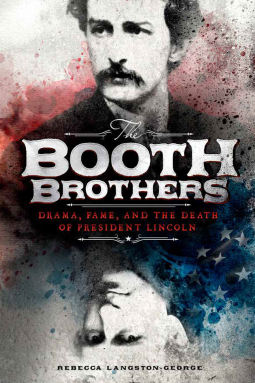
This is a fascinating read for middle school and up. Langston-George highlights the two Booth brothers and the different paths their lives took. One felt he was a Northerner, Edwin Booth, and the other, John Wilkes Booth, felt he was a Southerner.
Why two brothers would have such different points of view is never really discussed. In part, it may have to do with how they were raised. Their father, Junius Brutus Booth, was a famous actor, known for his Shakespeare, who was also prone to drink.
John may have been resentful of his older brother, Edwin. Junius allowed Edwin to tour the country with him but refused to allow John to do the same.
Langston-George gives a clear, succinct summary of the events that led to the shooting and its aftermath. She related little known information, like the strange event that occurred when Edwin Booth died.
This is a historical tale full of ironies. Pictures of conspirators and pictures of the personal belongings of Booth at the end provide context.
I previewed this digital arc on netgalley.com
This is a fascinating read for middle school and up. Langston-George highlights the two Booth brothers and the different paths their lives took. One felt he was a Northerner, Edwin Booth, and the other, John Wilkes Booth, felt he was a Southerner.
Why two brothers would have such different points of view is never really discussed. In part, it may have to do with how they were raised. Their father, Junius Brutus Booth, was a famous actor, known for his Shakespeare, who was also prone to drink.
John may have been resentful of his older brother, Edwin. Junius allowed Edwin to tour the country with him but refused to allow John to do the same.
Langston-George gives a clear, succinct summary of the events that led to the shooting and its aftermath. She related little known information, like the strange event that occurred when Edwin Booth died.
This is a historical tale full of ironies. Pictures of conspirators and pictures of the personal belongings of Booth at the end provide context.
I previewed this digital arc on netgalley.com
Saturday, April 22, 2017
Radium Girls

Lured by the glamour and high pay, these girls enjoyed their jobs until, one by one, they began getting sick. No laws protected workers from the occupational hazards of radium at this time.
Moore makes much of the fact that these women were unwitting pioneers who paved the way for safer conditions in all workplaces.
_advertisement%2C_1921.jpg)
The product these women worked with, a radium paste, was called Undark. In the twenties, when glowing watch dials for the military were in hot demand, not much was known about the dangers of working with radium.
By the late 1920's, the companies knew radium was harmful but still did nothing to protect its dial workers who lip-pointed. They would put the radium-tainted brush directly into their mouths to give the brush a point. This practice was encourage for quick production of the dials.
Radium's effects were devastating. Some women died quickly but some suffered a slow and painful death.
Some of these women, notably Catherine Donohue, fought courageously to win a lawsuit against the companies that employed them. Though the payouts were small, they changes working conditions for future employees.
The dial worker's cases led to the formation of OSHA. They also continued to help scientists by participating in tests at Argonne Laboratory.
Though other works on this topic focus on the physicians and scientists, Moore's work puts a human face to this tragedy by focusing on the women themselves.
Subscribe to:
Posts (Atom)