The bot or droid, known as Mother, selects an embryo from a catalog of many embryos. Depositing her into an artificial womb, the embryo grows into a baby.
Mother raises the girl, known as Daughter, but shields her from all knowledge of the outside world.
Mother has been programmed to save humanity but she will also kill humans if it benefits her larger plan. Daughter realizes that Mother has been lying to her when a stranger break through the protective barrier.
The stranger, played by Hilary Swank, looks a lot like a much older version of herself. The stranger is injured and distrustful of droids, including Mother. She claims to be in contact with other humans.
After the stranger is better, Daughter takes off with the stranger. She has learned some terrible truths about Mother and the family of embryos kept in the clear cases.
The stranger has secrets, too, which leads the daughter to reject her and return to Mother.
Ostensibly, Daughter has returned for her infant brother and the other embryos. She confronts rather than reconciles with Mother, who is it turns out, is more than a single bot.
In the end, viewers hear Mother's chilling lullaby. Mother is
capable of killing but so too are all the other players in this narrative.
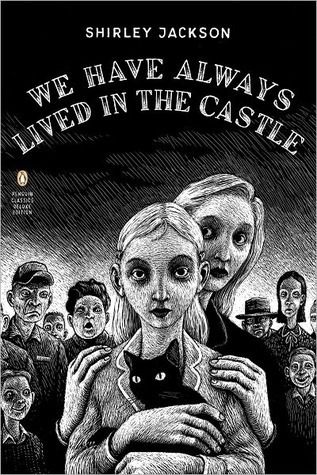
We Have Always Lived in the Castle by Shirley Jackson

We Have Always Lived in the Castle is a murder-mystery that combines Gothic elements with psychological suspense.
Though it gives the routine of two seemingly ordinary women, it also peers into the mind of a deranged young girl:
“I have often thought that with any luck at all, I could have been born a werewolf because the two middle fingers on both my hands are the same length, but I have had to be content with what I had…I like my sister Constance, and Richard Plantagenet, and Amanita phalloides, the death-cup mushroom. Everyone else in our family is dead.”
Merricat, eighteen, lives in the past along with her sister, who is about 28, and her ailing Uncle Julian. For some reason, Merricat excludes him as a member of her family in the opening paragraphs of the novel.
Merricat, who believes in magic and protection spells, lives wholly in her own imagination. She believes her cat, Jonas, can tell stories. She thinks that burying objects and nailing items to a tree can protect her and her sister from the villagers. She often professes that she wants to go to the moon on a winged horse.
None of Merricat’s talismans have any effect though when a relative, Charles Blackwood, visits and takes over the family’s home. The visitor alters the family in irreversible ways. Much like the events that occurred six years ago, the visitor’s actions alters the fabric of their lives.
Merricat insists that Charles is a “ghost” and a “demon.” He is, in fact, a greedy relative who wants access to the family’s safe. Merrricat’s fanciful imagination however will not allow such a prosaic explanation.
After the fire, and after the villagers exact terrible retribution, the Blackwood girls are more isolated than ever.
Merricat and Constance insist, however, that they are happy even if they are deprived of their beautiful things–the italian staircase and drawing room. Without their their fancy plates and drapes, they are in a barren, yet isolated place. They are finally “on the moon.”