An article from the NIH directors blog reports the finding that ultra processed foods lead to weight gain.
https://directorsblog.nih.gov/2019/05/21/ultra-processed-diet-leads-to-extra-calories-weight-gain/
Several online commenters wondered why a list of ultra processed food was not included. As it turns out, Cooking Light, has a February 2019 article on that topic.
https://www.cookinglight.com/eating-smart/nutrition-101/what-is-ultra-processed-food
Friday, May 24, 2019
Monday, May 6, 2019
My Name is Lucy Barton by Elizabeth Strout
Set in New York, My Name is Lucy Barton, is a psychological portrait of a woman who has survived a terrible upbringing of cruelty and poverty.

At the start of the novel, Lucy, who is temporarily hospitalized, received visits from her mother. Lucy is grateful for the visits and grateful for the doctor who seems to genuinely care for her.
Underneath the mother's kindness, however, there is an undercurrent of cruelty. Lucy is the only one who has successful escaped her humble beginnings in Amgash, IL.
Lucy has gone to college and become a writer but she still experiences loneliness and disconnection. Once after Lucy has her first baby, she calls her mother. Her mother, however, refuses to accept the charges for the collect phone call.
This novel is set in the 1980s before cell phones and smart phones. Another crucial part of the novel is the AIDS epidemic; Lucy feels a connection with outcasts and with the neighbor who is dying.
The brothers and sisters she left behind in Amgash feel some resentment for Lucy, who made it out of the rural community. Those themes are explored in Strout's award-winning short story collection, Anything is Possible.
Lucy discovers she will always be connected to her family even though she has left them and started life anew elsewhere.
The Chrysler building on the cover makes sense.

At the start of the novel, Lucy, who is temporarily hospitalized, received visits from her mother. Lucy is grateful for the visits and grateful for the doctor who seems to genuinely care for her.
Underneath the mother's kindness, however, there is an undercurrent of cruelty. Lucy is the only one who has successful escaped her humble beginnings in Amgash, IL.
Lucy has gone to college and become a writer but she still experiences loneliness and disconnection. Once after Lucy has her first baby, she calls her mother. Her mother, however, refuses to accept the charges for the collect phone call.
This novel is set in the 1980s before cell phones and smart phones. Another crucial part of the novel is the AIDS epidemic; Lucy feels a connection with outcasts and with the neighbor who is dying.
The brothers and sisters she left behind in Amgash feel some resentment for Lucy, who made it out of the rural community. Those themes are explored in Strout's award-winning short story collection, Anything is Possible.
Lucy discovers she will always be connected to her family even though she has left them and started life anew elsewhere.
The Chrysler building on the cover makes sense.
Tuesday, February 5, 2019
The Quality of Silence by Rosamund Lupton
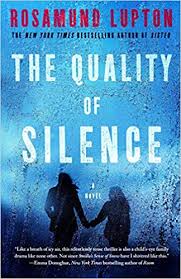
Despite a terrible childhood, Yasmin has found the love of her life in Matt whose adventurous spirit matches her own. Even with a few challenges–like her daughter’s disability and Matt’s tendency to wander, Yasmin believes in his love.
Police, however, have decided there are no survivors. Refusing to give up hope, Yasmin and Ruby make their way North by convincing a truck driver to take them to DeadHorse. From there they hope to take a taxi plane to Anaktue.
Yasmin takes matters into her own hands when he becomes ill; she drives the truck herself across dangerous icy roads.Fans of psychological suspense will love Lupton’s foray into the world of ice trucking. This is a complex novel about motherhood, disability, and ethical choices.
On one hand, Yasmin has felt that becoming a mother (especially a mother to a child who is so vulnerable) has made her invisible:
“It shocked her to realize that for years she’d felt bland, dull even to herself. Around her, everyone else’s characters were clearly defined, the borders of their personalities etched sharply, but not hers. She’d had tasks and chores and love for Ruby, huge love for her, but how would she have described who she was? Somewhere along the line she’d lost the idea of herself.”
Thus, the mother’s dangerous quest to find her husband is also quest to find her lost self. Yasmin endures the bitter cold of the Dalton highway, a possible stalker and the hazards of trucking during a storm.
Equally brave, Ruby decides how and when she’ll use her voice. Despite her mother’s repeated requests that she use her real voice, Ruby uses “Voice Magic” and twitter. In one courageous move at the end, Ruby uses this technology to thwart the evil doers who wish to harm her family.
Subscribe to:
Comments (Atom)