Reading Life

Followers

Wednesday, August 7, 2019

The Van Apfel Girls are Gone by Felicity McLean

This debut by Australian author, Felicity McClean, is a tantalizing page-turner. This exciting novel is a mystery and coming-of-age story in one. Tikka remembers her childhood--she grew up in a small Australian river valley.

One incident irrevocably changed the Tikka's life: the summer of 1992. Her neighbors, Corrie, Hannah, and Ruth, disappeared one fateful day. The police assume its a missing case but Tikka and her sister are withholding information. Tikka knows that the Van Apfel girls were planning to runaway, a fact she kept from police. Years later, as an adult, she wonders if she made the right choice.

She dwells on the Apfel girls' disappearance to the point where it begins to affect her mental health. As Corrie's memory consumes Tikka, she begins to see Corrie everywhere, or at least people who that look like Corrie.

McLean has a delightful sardonic wit. She frames the story with the Lindy Chamberlain case, a woman whose baby girl disappears while on a camping trip.

Tikka stages a skit based on the case for a school event the evening of the Van Apfel girls' disappearance. Just as it had in the Chamberlain case, the Van Apfel case causes many tongues to wag. Characters jump to conclusions about a male teacher.

Many novels focus on missing girls. Julia Phillips' Disappearing Earth focuses on how a Siberian community reacts to the disappearance of two of their own. 

Though it addresses the self-help industry and single motherhood,  Jaclyn Moriarty Gravity Is The Thing, is also about missing persons. 

Other titles about missing persons:
Lippman, Lauran. Lady in the Lake. 
Miranda, Megan. All the Missing Girls.
O'Nan, Stewart. Songs for the Missing

Saturday, July 27, 2019

Biloxi by Mary Miller

Louis McDonald, Jr always assumed he would inherit his father's estate after he retired. He didn't count on his wife leaving him and his Dad leaving the bulk of his estate to her.

Though he is, at times, an unlikeable character who drinks too much, Louis can also make amusing, wry observations.

His life goes in an unexpected direction when Layla, an overweight mixed-breed dog, and her wacky owner, Sasha, comes into life.


Louis' plight will appeal to anyone whose life didn't turn out the way they expected.


His life is peppered with a myriad of inconveniences. For instance, there is a bird that keeps hitting his window each morning. Even though his wife left him, his brother-in-law keeps visiting with left-overs. He is diabetic but can't remember to manage his sugar levels. 

Louis is an endearing curmudgeon who has a hard time finding the right things to say to people. The only one who seems to accept his failures are Layla, the dog who has entered his life by coincidence.  
While there's not much action, there's a lot of reflection and humor in this novel.

Thursday, July 11, 2019

The Monkey's Raincoat


"I had very much wanted to turn up some good news for Ellen Land. But good news, like magic, is sometimes in short supply."

Elvis Cole, The Monkey's Raincoat by Robert Crais.

This award-winning novel, the first in the Elvis Cole series, The Monkey's Raincoat is grisly yet entertaining. Elvis and his partner, a buddy from Vietnam, have taken on a challenging case.

Smart-mouthed and cocky, Elvis is also pure-hearted. He risks everything for his client, Ellen, who husband and son have gone missing. 

Cole likes Disney figurines and the fierce loyalty of his partner, Joe Pike. He hunts down criminals who take advantage of the weak, yet he also despises red tape and police bureaucracy.

His renegade tactics test the patience of LAPD. In the end, he does what he sets out to do--he solves the crime. He also gives Ellen her bit of good news. 


Wednesday, July 3, 2019

Imagine it Forward by Beth Comstock


Comstock has done everyone a service by describing how she changed the trajectory of her career. Despite being a self-described "introvert", Comstock led innovative change at NBC and GE. 

If you're looking to boost your career or change your work environment, this book is worth a read. 

Few professionals are able to tackle a subject like this with honesty and objectivity. Comstock is one of the few who does it effectively. She's honest about herself: she learned she comes across as blunt. 

Yet, she also learned how to use "permission slips" that allowed her to make positive steps forward and "sparks" that encourage discovery in the workplace. 

After being promoted to chief marketing officer at GE, she created program called "Imagination Breakthroughs." The program encouraged discovery and new revenue generating projects.

She also started "Ecomagination" which involved starting new green energy initiatives that lifted GE's brand value. 

Comstock celebrates these successes but she also doesn't shy away from describing failures which is to her credit. 

Promoted to a new position at GE, Comstock continued to find new ways to tell GE's story despite some unfortunate turn-of-events--the stock market crash of 2008 and some other mishaps. 

She brings many innovative people on board at GE--Ben Kaufman, CEO of Quirky.com--in order to change the status quo. Her changes resulted in a much more welcoming and innovative corporate culture.

Sprinkled throughout the text are quotations and challenges that will help readers create change in their own lives. She also uses text boxes to elaborate more fully on key terms e.g. "Emergence."

Sunday, June 23, 2019

Netflix's I Am Mother

The bot or droid, known as Mother, selects an embryo from a catalog of many embryos. Depositing her into an artificial womb, the embryo grows into a  baby.

Mother raises the girl, known as Daughter, but shields her from all knowledge of the outside world

Mother has been programmed to save humanity but she will also kill humans if it benefits her larger plan. Daughter realizes that Mother has been lying  to her  when a stranger break through the protective barrier.

The stranger, played by Hilary Swank, looks a lot like a much older version of herself. The stranger is injured and distrustful of droids, including Mother. She claims to be in contact with other humans.

After the stranger is better, Daughter takes off with the stranger. She has learned some terrible truths about Mother and the family of embryos kept in the clear cases.

The stranger has secrets, too, which leads the daughter to reject her and return to Mother. 

Ostensibly, Daughter has returned for her infant brother and the other embryos. She confronts rather than reconciles with Mother, who is it turns out, is more than a single bot.   

In the end, viewers hear Mother's chilling lullaby. Mother is 
capable of killing but so too are all the other players in this narrative. 


Saturday, June 22, 2019

Conferences for Bloggers


I've never heard of these conferences but they look like an awesome way for bloggers to network and gain new skills:

June 20-23: International Food Blogger Conference

The International Food Blogger Conference began in 2009 and now attracts 200+ food bloggers, writers, and digital media influencers with great passion for the industry. Events include food tours and sessions covering technology, social media, and blogging 101. “Lightning Talks,” fast-paced presentations from fellow attendees, are returning for the second year. IFBC19 takes place at the Centennial Hall Convention Center in Juneau, Alaska.

June 27-29: TravelCon

TravelCon is “the place to learn the business of travel media.” Boost your skills in video, photography, writing, and blogging. The conference has an impressive lineup of speakers to cover industry best practices and what’s buzzing right now in the travel industry. The event takes place at Westin Copley Place in Boston.

June 27-30: SHINE

SHINE is an invite-only conference for fitness, wellness, and nutrition social influencers. Attendees will experience a mix of workouts, networking, and breakout sessions covering topics like content creation and industry trends. Anyone interested in attending can fill out an application on the event website. The conference takes place in Anaheim, Calif., during the Idea World Fitness Conference.

July 15-17: MozCon

MozCon brings together industry leaders from search engine optimization (SEO), mobile, local search, and more. Attendees will learn tactics for ranking higher in search results and have plenty of opportunities for networking. The three-day event takes place in Seattle.


https://mediablog.prnewswire.com/2019/06/04/blogger-conferences-june-2019/

Monday, June 10, 2019

Where The Crawdads Sing by Delia Owens

Where the Crawdads Sing by Delia Owens

One by one Kya's family leaves her--her mother, her siblings, her beloved Jodie, and lastly her alcoholic and abusive father. Kya, whom the town  calls "the marsh girl," learns to rely on herself and turns to the marsh for comfort. 

While its difficult to fathom how she can do this, Kya learns to provide food for herself by bartering with a local bait shop owner, Jumpin'. She hides from anyone wanting to send her to the local school but eagerly learns to read from a local boy, Tate.

Shunned by the inhabitants of Barkley Cove, Kya learns to hide as skillfully as a deer. Part of Kya, however, still yearns to connect with the townspeople.

Maybe that's why she falls for Chase, the confident local rich kid who motors a flashy boat. By this point, Tate has also abandoned her--he has gone off to college. 

Kya believes Chase's lies--that he loves her and intends to marry her. Only later will Kya comprehend the depth of his deception and it nearly destroys her.

This is an incredible story with many plot twists that keep readers guessing. 

Mired with Kya's story is the story of the town itself and its prejudice towards her. When Chase turns up dead, the sheriff automatically accuses Kya.

Since childhood Kya has collected feathers, shells, and other marsh specimens. Just as Kya uses her intelligence to scientifically catalog her marsh specimens, Kya will use her intelligence to safeguard what she believes rightly belongs to her.  

This debut spent many weeks on the New York Times best-selling list and will soon become a major film.

Saturday, June 1, 2019

The Tuscan Child by Rhys Bowen

Bowen's historical novel, The Tuscan Child, is a gratifying read. 

Joanna and her father, Sir Hugo, couldn't be more different. After his death, Joanna is startled to find a love letter to a woman in Italy. 

Intrigued, Joanna goes to San Salvatore in Italy, to discover more about her father's life. She knew he had crashed while serving in World War II but she had not known the exact location, San Salvatore, a hill town in Tuscany.

Though there are no hotels in San Salvatore, Joanna finds a comfortable place to stay. She feels at home with Paola's family until a strange event occurs. Someone has drowned one of the local men in the well near Joanna's rented room.

Police think Joanna, a foreigner, is suspicious, even though she insists she has nothing to do with the man's murder.

Renzo, the son of a rich landowner in San Salvatore, has a connection to her father and the woman he names in the letter, Sofia Bartoli. Is he the "beautiful boy" her father mentions in the same letter?

The novel takes many twists and turns and Joanna learns what's true and what's false. 

At the Corpus Christi festival she beings to see Renzo in a new light.  Though she does not trust Renzo, something is drawing her and him together.


This is a charming World War II story with light intrigue and light romance.

Tuesday, May 28, 2019

Still I Rise

Here's hope for a gray day.


Still I Rise


By Maya Angelou

You may write me down in history
With your bitter, twisted lies,
You may trod me in the very dirt
But still, like dust, I'll rise.

Does my sassiness upset you?
Why are you beset with gloom?
’Cause I walk like I've got oil wells
Pumping in my living room.

Just like moons and like suns,
With the certainty of tides,
Just like hopes springing high,
Still I'll rise.

Did you want to see me broken?
Bowed head and lowered eyes?
Shoulders falling down like teardrops,
Weakened by my soulful cries?

Does my haughtiness offend you?
Don't you take it awful hard
’Cause I laugh like I've got gold mines
Diggin’ in my own backyard.

You may shoot me with your words,
You may cut me with your eyes,
You may kill me with your hatefulness,
But still, like air, I’ll rise.

Does my sexiness upset you?
Does it come as a surprise
That I dance like I've got diamonds
At the meeting of my thighs?

Out of the huts of history’s shame
I rise
Up from a past that’s rooted in pain
I rise
I'm a black ocean, leaping and wide,
Welling and swelling I bear in the tide.

Leaving behind nights of terror and fear
I rise
Into a daybreak that’s wondrously clear
I rise
Bringing the gifts that my ancestors gave,
I am the dream and the hope of the slave.
I rise
I rise
I rise.


source:  https://www.poetryfoundation.org/poems/46446/still-i-rise

Friday, May 24, 2019

Ultra Processed Foods

An article from the NIH directors blog reports the finding that ultra processed foods lead to weight gain.

https://directorsblog.nih.gov/2019/05/21/ultra-processed-diet-leads-to-extra-calories-weight-gain/

Several online commenters wondered why a list of ultra processed food was not included. As it turns out, Cooking Light, has a February 2019 article on that topic.

https://www.cookinglight.com/eating-smart/nutrition-101/what-is-ultra-processed-food


Monday, May 6, 2019

My Name is Lucy Barton by Elizabeth Strout

Set in New York, My Name is Lucy Barton, is a psychological portrait of a woman who has survived a terrible upbringing of cruelty and poverty. 


At the start of the novel, Lucy, who is temporarily hospitalized, received visits from her mother. Lucy is grateful for the visits and grateful for the doctor who seems to genuinely care for her. 

Underneath the mother's kindness, however, there is an undercurrent of cruelty. Lucy is the only one who has successful escaped her humble beginnings in Amgash, IL. 

Lucy has gone to college and become a writer but she still experiences loneliness and disconnection. Once after Lucy has her first baby, she calls her mother. Her mother, however, refuses to accept the charges for the collect phone call.

This novel is set in the 1980s before cell phones and smart phones. Another crucial part of the novel is the AIDS epidemic; Lucy feels a connection with outcasts and with the neighbor who is dying. 

The brothers and sisters she left behind in Amgash feel some resentment for Lucy, who made it out of the rural community. Those themes are explored in Strout's award-winning short story collection,  Anything is Possible

Lucy discovers she will always be connected to  her family even though she has left them and started life anew elsewhere. 

The Chrysler building on the cover makes sense.

Tuesday, February 5, 2019

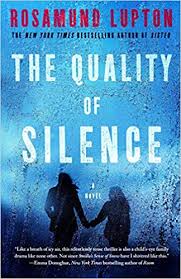
The Quality of Silence by Rosamund Lupton


This is a novel that pulls readers in immediately because there’s so much at stake for Yasmin and her daughter, Ruby. The pair hope to rescue Matt, Yasmin’s husband and Ruby’s father, from an outpost in Northern Alaska that burned to the ground. 

Despite a terrible childhood, Yasmin has found the love of her life in Matt whose adventurous spirit matches her own. Even with a few challenges–like her daughter’s disability and Matt’s tendency to wander, Yasmin believes in his love. 

Police, however, have decided there are no survivors. Refusing to give up hope, Yasmin and Ruby make their way North by convincing a truck driver to take them to DeadHorse. From there they hope to take a taxi plane to Anaktue. 

Yasmin takes matters into her own hands when he becomes ill; she drives the truck herself across dangerous icy roads.Fans of psychological suspense will love Lupton’s foray into the world of ice trucking. This is a complex novel about motherhood, disability, and ethical choices. 

On one hand, Yasmin has felt that becoming a mother (especially a mother to a child who is so vulnerable) has made her invisible:

“It shocked her to realize that for years she’d felt bland, dull even to herself. Around her, everyone else’s characters were clearly defined, the borders of their personalities etched sharply, but not hers. She’d had tasks and chores and love for Ruby, huge love for her, but how would she have described who she was? Somewhere along the line she’d lost the idea of herself.”

Thus, the mother’s dangerous quest to find her husband is also quest to find her lost self. Yasmin endures the bitter cold of the Dalton highway, a possible stalker and the hazards of trucking during a storm.

Equally brave, Ruby decides how and when she’ll use her voice. Despite her mother’s repeated requests that she use her real voice, Ruby uses “Voice Magic” and twitter. In one courageous move at the end, Ruby uses this technology to thwart the evil doers who wish to harm her family.

Sunday, December 30, 2018

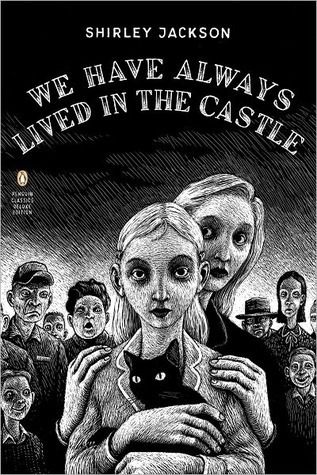
We Have Always Lived in the Castle


We Have Always Lived in the Castle by Shirley Jackson


Most readers know Shirley Jackson’s chilling short story, “The Lottery,” or her gothic novel, The Haunting of Hill House. Her masterpiece, We Have Always Lived in the Castle, is not as well known. 

We Have Always Lived in the Castle is a murder-mystery that combines Gothic elements with psychological suspense. 

Though it gives the routine of two seemingly ordinary women, it also peers into the mind of a deranged young girl:

“I have often thought that with any luck at all, I could have been born a werewolf because the two middle fingers on both my hands are the same length, but I have had to be content with what I had…I like my sister Constance, and Richard Plantagenet, and Amanita phalloides, the death-cup mushroom. Everyone else in our family is dead.”

Merricat, eighteen, lives in the past along with her sister, who is about 28, and her ailing Uncle Julian. For some reason, Merricat excludes him as a member of her family in the opening paragraphs of the novel.

Merricat, who believes in magic and protection spells, lives wholly in her own imagination. She believes her cat, Jonas, can tell stories. She thinks that burying objects and nailing items to a tree can protect her and her sister from the villagers. She often professes that she wants to go to the moon on a winged horse.

None of Merricat’s talismans have any effect though when a relative, Charles Blackwood, visits and takes over the family’s home. The visitor alters the family in irreversible ways. Much like the events that occurred six years ago, the visitor’s actions alters the fabric of their lives. 

Merricat insists that Charles is a “ghost” and a “demon.” He is, in fact, a greedy relative who wants access to the family’s safe. Merrricat’s fanciful imagination however will not allow such a prosaic explanation. 

After the fire, and after the villagers exact terrible retribution, the Blackwood girls are more isolated than ever. 

Merricat and Constance insist, however, that they are happy even if they are deprived of their beautiful things–the italian staircase and drawing room. Without their their fancy plates and drapes, they are in a barren, yet isolated place. They are finally “on the moon.”

Friday, December 28, 2018

A Sense of Belonging in The Haunting of Hill House by Shirley Jackson

The Netflix series of the same title, though different, has spawned new interest in this classic about a haunted house. Dr. Montague invited participants to the house that he believes are susceptible to the paranormal. Only later does he realize the enormity of his misjudgment. One of the participants, who is more fragile than the others, is driven to insanity. What Eleanor wants more than anything is to be accepted. She has taken care of her ailing mother at the expense of her own happiness. Now, in her thirties, in want of adventure, Eleanor "borrows" her sisters car and meets the group at Hill House. Poignantly, Eleanor thinks that she has made lasting friendships in less than a week. Naively, she assumes Theo would want to continue their friendship after the Hill House adventure is over. Eleanor says she intends to move into Theo's small apartment after she leaves Hill House. This is surprising at first given how much they argue. They fight over foolish things e.g. Luke's attention or being in the group's "spotlight." More than anything else, The Haunting of Hill House is about yearning for a sense of belonging. "Come Home, Eleanor," a ghostly hand writes on a wall in blood. Eleanor is mortified that the ghost has called her out by name. This isn't the spotlight that she wants. Eleanor, who acutely yearns to belong, is afraid of appearing foolish and being rejected. When Luke says she isn't welcome anymore, after her unusual behavior on the staircase, Eleanor is beyond crushed. The tragic ending coincides with her lamentations at being rejected from Hill House.

Wednesday, December 5, 2018

Inheritance: a Memoir of Genealogy, Paternity, and Love by Dani Shapiro


This memoir, which is in four parts, is Dani Shapiro's most intimate memoir to date. Shapiro who has always considered herself her father's daughter is devastated to learn that he is not her biological father.

Despite clues along the way, nothing clicks until she takes a DNA test. She expected to find that she is 100% Jewish but the test reveals something else altogether. She is biologically related to her mother but not to her father. 

Gradually, more details come to light. Before Shapiro was born, her parents had visited an infertility clinic known to mix sperm. Though she hopes her parents had not concealed anything from her, it becomes obvious they knew she was donor-conceived. 

Shapiro claims she had always known something was amiss. For Shapiro, who was devoted to her father, but always felt at odds with her family, the DNA results answer many troubling questions. 
The DNA results opens old wounds, leaving Shaprio completely unmoored. 

She describes how lost she feels in poetic language:

"I am the black box, discovered years--many years--after the crash. The pilots, the crew, the passengers have long been committed to the sea. Nothing is left of them. Fathoms deep, I have spent my life transmitting the faintest signal...I am also the diver who has discovered the black box...I had been looking for it all my life without knowing it existed."

Eventually, she has a meeting with her biological father whom she strongly resembles. They are brought together through the magic of social media.

Shapiro digs deeper, investigating the way cryobanks currently operate. She interviews dozens of donor-conceived individual who feel just as exiled and lost as she does.

As she forges deeper relationships with her biological family, however, Shapiro begins to see everything in a new light: as a blessing.  

Shapiro, who was raised as an orthodox Jew, is peppered with Jewish phrases and expressions. Her identity is still firmly Jewish, even if she is half Christian.

She puts all of her previous writings in perspective, realizing nearly all of her works were about family secrets.

Though she gives her social father "kol hakavod" (all the honor), she comes to cherish her biological one as well.

Shapiro's story is so important in this age when DNA kits are becoming more and more recreational. As more and more individuals have genetic testing done, more connections will be made. The likelihood of family secrets becoming accidently unearthed--as Shapiro's had--will increase over time.

Friday, November 9, 2018

The Mere Wife by Maria Dahvana Headley

The Mere Wife by Maria Dahvana Headley is a retelling of Beowulf and a social critique of contemporary society. On some levels, it succeeds. Gated community residents label anyone who live outside their boundaries "monsters".

Dana and her ancestors have actually lived on the mountain long before it was turned into a high-end suburb. 


After serving in the military, Dana returns to a cave and an abandoned railroad station. After nearly dying overseas, she awakes to find herself six months pregnant.  


When he is born, Gren draws startled reactions. He is described as having fur and claws. 


Wishing to protect him, Dana chooses to isolate him from the world. Gren accepts isolation, at first, and then grows weary of it.


Like Frankenstein's monster, he yearns for what he cannot have--Herot Hall. For him, it all comes down to a piano and the boy who plays it, Dilly. They represent the outside world, the world that Dana has forbidden him to inhabit.


The reader can easily identify with Gren's desire. The friendship between Gren and Dylan is breathtaking. The duality of Gren, his inability to fit in either world, is beautifully captured.

The unique narration and magic realism are startling beautiful.

The saint that follows Dana and who is known as "sorrow" is brilliantly rendered.

Without giving too much away, Headley orchestrates the ending perfectly. Dana destroys what has wrecked her life. She is a devoted mother who becomes monstrous in her devotion.


The novel which is about fierce motherhood, hearth and home will give book clubs much to discuss.


Friday, November 2, 2018

I am, I am, I am by Maggie O'Farrell.

This is a new memoir by novelist Maggie O'Farrell who lived through some horrifying experiences--seventeen brushes with death. Some are more chilling than others, like the time she met and almost succumbed to a serial killer.

Other times were less dramatic like the time that she jumped off a harbor wall into the sea from a cliff. 

Being Irish, she was cognizant of the cliffs and raging seas, yet her desire to experience wildness got the better of her. Worst still, a bout with encephalitis during childhood left her with limited spatial awareness. When she dropped herself into the sea at night, she was unable to tell which way was up and which was down.

When O'Farrell is close to death, the miraculous often happens. The only one who tries to save her when she is drowning is a boy who is secretly in love with her.

O'Farrell writes about being aware that she is about to die (at age 8) from encephalitis, her near drowning in Africa, and a tropical disease she acquired while visiting China, as well as many other instances she came close to dying.

Instead of feeling unlucky, O'Farrell feels incredibly lucky that she has traveled and has escaped many horrifying situations. 

In the last few chapters, she writes poignantly of her own child and her recovery from a severe allergic reaction.

A cleverly written book, this memoir also gives readers a deeper understanding and appreciation for life. 


Wednesday, October 31, 2018

Halloween edition of American Libraries Dewey Decimal podcast

The podcast, Dewey Decimal has a fantastic episode (episode #31) about the haunted library in Peoria, IL. 

Listen to the podcast and decide for yourself--supernatural events or urban legend? 

Multiple library directors have met untimely ends. Some say the land that library is built upon is cursed land.

Some staff members claim to have heard unusual experiences while working at the library--falling books, temperature changes, lights coming on and off on their own. One maintenance worker saw an entity enter an elevator.

The current director considers the ghost stories "local lore."


The podcast also features Mary Roach, who wrote Spook: Science Tackles the Afterlife, and John B. Kachuba, Ghosthunting Illinois.

https://soundcloud.com/dewey-decibel-703453552

Monday, October 29, 2018

Forest of Memory by Mary Robinette Kowal

Katya is an Authenticities and Antiquities dealer in the far future where the details of life are recorded on Captures. She collects items before this time for their nostalgic value, ordinary things like typewriters and dictionaries. 

She relies on her A.I. like many would really one a friend. That is why she find herself so unaccountably alone when her A.I. goes off-line.

Most of the novelette is Katya's experience of being kidnapped for three days by a strange masked man. He shows no empathy toward her during the three days she is "off line," but mysteriously he allows her to live to tell her tale.

This is one of the stories that leaves readers hunger for more, yet Kowal keeps some things shrouded in mystery.

This is a captivating SF/fantasy tale about how we construct memories and how we survive is both puzzling and thought-provoking.

Saturday, October 20, 2018

Playwright Lauren Gunderson

The most widely produced playwright in the United States is Lauren Gunderson. She has written I and You, The Silent Sky, The Revolutionists. We are Denmark and many other plays. 


She writes about smart, funny women trying to make their mark in the world. The Silent Sky is about Henrietta Swan Leavitt, one of the first female astronomers.

If you're looking for a STEM inspired drama, try Lauren Gunderson.

American Theatre keeps tabs on the most produced playwrights of the year.  For more playwrights on their list,

https://www.americantheatre.org/2017/09/21/the-top-20-most-produced-playwrights-of-the-2017-18-season/

Thursday, October 18, 2018

Great openings to novels

From Leif Enger's Virgil Wander


"Now I think the picture was unspooling all along and I just failed to notice. The obvious really isn't so--at least it wasn't to me, a Midwestern male cruising a medium altitude, aspiring vaguely to decency, contributing to PBS, moderated in all things including romantic forays, and doing unto others more or less reciprocally.

If I were to pinpoint when the world began reorganizing itself--that is, when my seeing of it began to shift--it would be the day a stranger named Rune blew into our bad luck town of Greenstone, Minnesota, like a spark from the boreal gloom." 

Wednesday, October 17, 2018

The City of Ghosts by Victoria Schwab

Perfect for Halloween, The City of Ghosts is the story of Cass who nearly drowned. Ever since, she has the ability to pull back the Veil between the living and the dead. Things are already spooky but they are about to get a lot spookier in this middle grade novel. 
 

Friday, September 28, 2018

The Vanishing Act of Esme Lennox by Maggie O'Farrell

Though its hard to believe, in the not too distant past women could be placed in insane asylums by their husbands or families if they refused to conform to norms. 

Women could be sent to psychiatric institutes indefinitely if a family member said a woman was not behaving as she should. 

The novel begins by Iris learning she has a great Aunt she never knew about, Esme, who has been in a mental institution for sixty years.  

Since Cauldstone is closing, the institution looks to Esme's nearest relative to take her great Aunt into her home.

The central mystery that propels the narrative is how and why did Esme become confined. Esme who has an excellent memory searches her past for clues--when did her life go disastrously wrong? Did it go wrong on New Year's eve in the 1930's when she danced with an attractive boy? Or did her problems begin much earlier when the family lived abroad?

Iris, who owns her own vintage clothing shop, has her own share of problems. She has a complicated love life. She nearly does not take Esme into her home. Yet there's something compelling about Esme.

Esme, who is immensely likeable for her openness and intelligence, recognizes Iris' home as her family's old home.   


Deciphering clues as a detective would do, Esme learns the reason she was imprisoned along with new secrets that Kitty, her older sister, has been keeping.

O'Farrell takes a subject which could have been depressing and infuses with humor and telling details. The blazer, the photo of Iris's father, the green wool blanket, the photo of two women--one standing and one seated--are all vital clues.

The ending comes as a surprise but well-justified in this well-plotted, psychological novel. Kathy Hepinstall's Blue Asylum explores similar themes but is set in the civil war South.

If you liked this novel, you might also enjoy the short play, The Insanity of Mary Girard by Lanie Robertson. 

Tuesday, September 18, 2018

Harry's Trees by Jon Cohen

Readers who likes eccentric characters and strange twists of fate will love Harry's Trees. 

Oriana and Amanda live near the woods in the Endless Mountains area of Pennsylvania. Life is ordinary until Amanda's perfect husband and Oriana's perfect father dies. 

 Dean dies sprawled out like a snow angel in a snowy field. His buddy, Ronnie, is convinced there are feather impressions in the snow. He believes Dean has become some sort of  winged creature--a red-tailed hawk--who can interact with the townspeople after his death. 

But its more than feathers that take on a larger significance. The lottery ticket Harry bought is piece of bad magic, an unlucky talisman.

Amanda Jeffers, Oriana's mother, doesn't believe in miracles, fairy tales, or magic but nonetheless she shelters Harry. She lets him rent out her tree house because they are in the same club--both having survived a year after a spouse's death.

Amanda thinks Harry is safe--that he is a "bland, levelheaded bureaucrat who understood rules." Little does she know that Harry is the opposite of what she thinks.

Harry is just like the "grum" in the story Oriana loves from Olive Perkins' library. He is the catalyst that will change everyone perspective; this is, if his brother, Wolf, doesn't catch up with him first.

Wolf is appropriately named because he is greedy and destructive--the villain of Harry's childhood. His greed is the opposite of Harry's altruism. 

Wolf is drawn to the only other character who is extremely voracious--Stu Gipner. Will Wolf and Stu bring destruction to the fairy tale world Harry and Oriana have constructed? Will Amanda, who is jaded and practical, believe in the fairy tale? 

Thursday, September 13, 2018

On Writing

"Finish. The difference between being a writer and being a person of talent is the discipline it takes to apply the seat of your pants to the seat of your chair and finish. Don’t talk about doing it. Do it. Finish."

E. L. Konigsburg  (via whatsinsideawritersmind)
Photo: picjumbo.com

Sunday, September 2, 2018

The Dark Side of Innocence: Growing Up Bipolar by Terri Cheney

Terri Lynn was popular--she was a cheerleader and a Mauna Loa, a popular girls' group. She sat by the tiger--her school had a statue of a tiger where the popular kids gathered. Stoners and nerds weren't allowed anywhere near it.

Despite this, Terri Lynn is deeply unhappy. She contents almost every day with something she calls "the Black Beast." Under his direction, she alternates between being an people-pleasing overachiever and a teen who drinks, runs away from home, and wrecks her beloved car. She also writes till her fingers cramp, makes out with boys, and cuts herself with knives and pins.

She doesn't know it at the time but later she learns that "the Black Beast" is bipolar disorder. Cheney, who has also written Manic about her adult experience with bipolar disorder, writes eloquently about her childhood and adolescent battle with the disorder.


During a manic phase, Terri discards the graduation speech she had practiced and creates a new one on the spot. Luckily, her speech is well-received though it does raise eyebrows. 

Terri believes her drive is the catalyst for the "Black Beast." She vows not to strive for perfection at Vassar. As she explains in the afterward, though, and in Manic, her manic phases return with a vengeance.

Few books are written about mental illness and even fewer are written as well as this one. 

Thursday, August 30, 2018

Powerful words--Octavia Butler

All that you touch
You Change.

All that you Change
Changes you.

The only lasting truth
is Change.

God is Change.

Monday, August 20, 2018

Instructions for a Heat Wave by Maggie O'Farrell

While a heat wave rages in 1970s London, a charming family is in crisis. The head of the household--Robert Riordan--has disappeared. The youngest daughter, Aoife, who left for New York, returns to help her family deal with her father's disappearance.

Aoife and her sister Monica who have a strained relationship attempt to settle their differences. Monica blames Aoife for divulging a secret to her ex-husband. Aoife denies revealing anything to Rob, Monica's first husband. 

In fact, none of the Riordan's have problem-free relationships. Michael Francis and his wife have a troubled marriage. Despite believing she had a wonderful marriage, Gretta suspects her husband abandoned the family after they find money taken from their account. 

Aoife is in love with someone but she hides the fact that she is dyslexic from him. 

O'Farrell does a wonderful job of balancing the different points of view of the siblings with those of Gretta. The problems in the Riordan family are well-developed and handled with humor and irony.