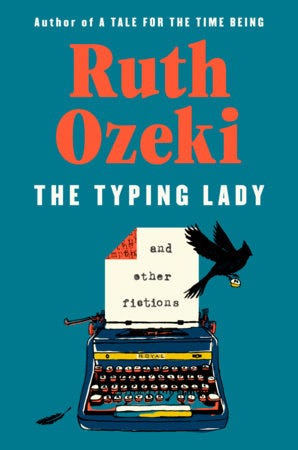
Not surprisingly, typewriters figure prominently in The Typing Lady: and other fictions.
In “The Typing Lady,” the lady collects typewriters. When she types, though, an uncanny thing happens.
The typewriters write stories of their own — emotional tales that she cannot control. The “typing lady” takes the typewriters apart, looking for the mechanism that accounts for the literary outpouring, but she cannot discover the source.
In “Leafblower” Mel uses a manual typewriter, a Remington Rand, to type poems, her real love, and a laptop to earn a paycheck as a technical writer. She also takes care of an elderly couple in exchange for a cheap room over their garage.
In one of the best stories, “Ships in the Night,” Cayenne, an aspiring romance writer, has a portable pink Olivetti. She wants to launch a career as a writer so her daughter can have a more stable life.
In “Feelings” two mean-spirited girls decide to engage in a school project. They are to write a report about an act of compassion they undertake in their community. Kai types a letter to a lonely classmate on a 1964 IBM Model C Executive.
Ozeki’s stories are filled with aspiring writers who try but fail to send deeply personal letters. In The Typing Lady characters write deeply personal missives that they can never send (“The Anthropologist’s Kid,” “Feelings,” and “One Art”).
More than that, though, Ozeki’s stories are filled with writers whose writing ambitions will never be satisfied. Cayenne, who wanders between lovers, keeps changing the plot of her novel. The daughter in “Ships in the Night,” knows her mother will never finish her romance novel.
The last two stories even more directly deal with how difficult it is to lead a creative life. The couple in “Where Ambition Goes to Die,” have a strained relationship because of the husband’s ambition to write fiction. In this story, his ambition becomes a black-haired girl filled with daring and impulsive ideas. The couple is calmer now that the black-haired girl is gone. After she disappears, they sleep “unhaunted.”
In “The Problem of the Body,” an author plans to fake her own death to avoid going on a book tour. She also appropriates her granddaughter’s dating app. She goes to cafes and chats with boys who think they are meeting her granddaughter. Though she knows its creepy, she does this until one of them recognizes her as “that writer.”
These stories are impressively complex and nuanced. Each story is in some way related to the art of writing, storytelling, and communicating in an increasingly confusing world. Much like Colm Toibin’s stories, they explore the drama of what is unsaid or the meeting that never happens.
No comments:
Post a Comment