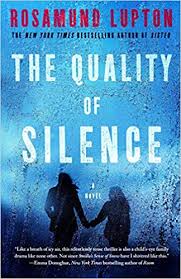
This is a novel that pulls readers in immediately because there’s so
much at stake for Yasmin and her daughter, Ruby. The pair hope to rescue
Matt, Yasmin’s husband and Ruby’s father, from an outpost in Northern
Alaska that burned to the ground.
Despite a terrible childhood, Yasmin has found the love of her life
in Matt whose adventurous spirit matches her own. Even with a few
challenges–like her daughter’s disability and Matt’s tendency to wander,
Yasmin believes in his love.
Police, however, have decided there are no survivors. Refusing to
give up hope, Yasmin and Ruby make their way North by convincing a truck
driver to take them to DeadHorse. From there they hope to take a taxi
plane to Anaktue.
Yasmin takes matters into her own hands when he becomes ill; she drives the truck herself across dangerous icy roads.Fans of psychological suspense will love Lupton’s foray into the
world of ice trucking. This is a complex novel about motherhood,
disability, and ethical choices.
On one hand, Yasmin has felt that becoming a mother (especially a
mother to a child who is so vulnerable) has made her invisible:
“It shocked her to realize that for years she’d felt bland, dull even
to herself. Around her, everyone else’s characters were clearly
defined, the borders of their personalities etched sharply, but not
hers. She’d had tasks and chores and love for Ruby, huge love for her,
but how would she have described who she was? Somewhere along the line
she’d lost the idea of herself.”
Thus, the mother’s dangerous quest to find her husband is also quest
to find her lost self. Yasmin endures the bitter cold of the Dalton
highway, a possible stalker and the hazards of trucking during a storm.
Equally brave, Ruby decides how and when she’ll use her voice.
Despite her mother’s repeated requests that she use her real voice, Ruby
uses “Voice Magic” and twitter. In one courageous move at the end, Ruby
uses this technology to thwart the evil doers who wish to harm her
family.
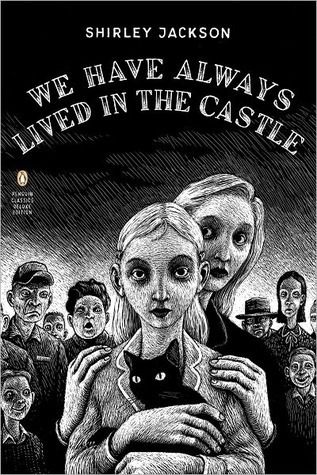
Most readers know Shirley Jackson’s chilling short story, “The
Lottery,” or her gothic novel, The Haunting of Hill House. Her
masterpiece, We Have Always Lived in the Castle, is not as well known.
We Have Always Lived in the Castle is a murder-mystery that combines
Gothic elements with psychological suspense.
Though it gives the routine
of two seemingly ordinary women, it also peers into the mind of a
deranged young girl:
“I have often thought that with any luck at all, I could have been
born a werewolf because the two middle fingers on both my hands are the
same length, but I have had to be content with what I had…I like my
sister Constance, and Richard Plantagenet, and Amanita phalloides, the
death-cup mushroom. Everyone else in our family is dead.”
Merricat, eighteen, lives in the past along with her sister, who is
about 28, and her ailing Uncle Julian. For some reason, Merricat
excludes him as a member of her family in the opening paragraphs of the
novel.
Merricat, who believes in magic and protection spells, lives wholly
in her own imagination. She believes her cat, Jonas, can tell stories.
She thinks that burying objects and nailing items to a tree can protect
her and her sister from the villagers. She often professes that she
wants to go to the moon on a winged horse.
None of Merricat’s talismans have any effect though when a relative,
Charles Blackwood, visits and takes over the family’s home. The visitor
alters the family in irreversible ways. Much like the events that
occurred six years ago, the visitor’s actions alters the fabric of their
lives.
Merricat insists that Charles is a “ghost” and a “demon.” He is, in
fact, a greedy relative who wants access to the family’s safe.
Merrricat’s fanciful imagination however will not allow such a prosaic
explanation.
After the fire, and after the villagers exact terrible retribution, the Blackwood girls are more isolated than ever.
Merricat and Constance insist, however, that they are happy even if
they are deprived of their beautiful things–the italian staircase and
drawing room. Without their their fancy plates and drapes, they are in a
barren, yet isolated place. They are finally “on the moon.”

The Netflix series of the same title, though different, has spawned new interest in this classic about a haunted house.
Dr. Montague invited participants to the house that he believes are susceptible to the paranormal. Only later does he realize the enormity of his misjudgment. One of the participants, who is more fragile than the others, is driven to insanity.