Reading Life

Followers

Wednesday, August 26, 2020

Wick Poetry Center

Wick Poetry Center,

https://www.kent.edu/wick


Community poems at the Wick Poetry Center.

Users can read a model poem and than submit one of their own inspired by that model. 

The current community poem at The Wick Center honors nurses. The community can submit poems based on the model poem "Some Days."

https://communitypoems.travelingstanzas.com/somedays

Tuesday, August 25, 2020

Look Me In The Eye by John Elder Robinson


 Robinson who has written other books about autism has a difficult start in life. He grew up feeling different and not knowing why or how to label it. He was frequently told he needed to look people in the eye. Ostracized by kids, he turned to adults who were more forgiving of his lack of social graces. He learned to love machines (e.g. trains and amplifiers) and could visualize complex equations in his head.

In spite of a high intelligence, he could not adapt to school and dropped out at 16. He was a practical joker who learned to create elaborate devices that would fool the eye. He was also spending more and more time learning the ins and outs of the music industry. 

Eventually, he created a guitar that appeared to explode on stage, which the band KISS became famous for. Several chapters in Look Me in the Eye are devoted to adventures he had while working as a sound engineer for KISS. The band paid well but sporadically. Robison eventually explored a career in the corporate world. 

Despite not having an electrical engineering degree, Robinson found working at Milton Bradley an easy fit. He could designing electronic toys as well if not better than any of the engineers with degrees. 

As good as he was at design, though, he could not hack the corporate culture:


"I was thoroughly sick of all the criticism. I was sick of life.   Literally. I had come down with asthma, and attacks were sending me to the emergency room every few months. I hated to get up and face another day at work. I knew what I needed to do. I needed to stop forcing myself to fit into something I could never be a part of A big company. A group. A team."


Robinson thought the answer is to create his own business, repairing high-end cars like Land Rovers and Rolls-Royces. While that works for awhile, it isn't completely satisifying.

A friend who was also a therapist helps him making a discovery about himself that changes his outlook on life. The chapter, "A Diagnosis at Forty" focuses on his coming to terms with his diagnosis. 

Robinson not only comes to terms with his autism, he also makes peace with his parents who were at times indifferent and abusive while he was growing up.

This is an intimate portrait of one man's journey with autism and how it affected his professional life and personal life. He writes about his son, who also has autism, in a separate book, Raising Cubby. Robison also writes about his search for experimental therapies in Switched On. 

Robison is a scholar-in-residence at the College of William and Mary. 


Monday, August 17, 2020

Things You Would Know if You Lived Around Here by Nancy Wayson Dinan

This is a haunting novel about a girl, Boyd, that feels other people's pain. She feels other people's emotions so deeply that she ends up isolating herself and denying herself what most everyone needs--commitment and love.

Written in a domestic fabulist style, strange things happen in this novel. A woman who has been in a coma for a decade, awakens during the 2015 Memorial day floods in Central Texas. She puts on some clothes taken from a scarecrow and follows Boyd's path.

Boyd is trying to find her friend Issac whom she knows is in grave danger. After escaping a flooded car, he is dangling from a tree that is precariously perched over the flooded river.

In the midst of the storm, ordinary people, like soap-maker, Carla, become completely unglued. Classics professor Kevin is drawn to his ex-wife and the local, mostly stoned, retired high school teacher goes off on a fruitless treasure hunt. 

All of these odd events are juxtaposed with sections entitled "things you would know," and indeed those are things local people know about the Central Texas area. In these sections readers find stories about Maximilian's Gold and other stories unique to the area. 

What this novel ends with is possibility. Boyd changes in the course of the novel to the point where she is  able to let her gifts go; she no longer wants to be the conduit of of other people's pain. 

Reading a novel like this is like running a marathon but in a good way. Oddities and strangeness abound as people make strange decisions in a storm that are life-changing.


Sunday, July 19, 2020

Inkspell by Cornelia Funke

In the delightful second novel in Cornelia Funke's Inkheart trilogy, Inkspell, Dustfinger, Meggie, Mo, Farid, and Resa find themselves transported into Fenoglio's Inkworld. 

Farid and Meggie enter Inkworld by choice while Mo and Resa are taken by force. Dustfinger has already taken up residence in Inkworld with the help of Orpheus.  

Inkworld, though, has irrevocably changed--mostly because of Fenoglio's bumbling attempts to fix plot problems. Amusingly, Fenoglio has lost control of his own story. 

The tyrant Adderhead fears death and a mysterious figure known as "the Bluejay." This legendary person, invented by Fenoglio, creates new problems for Mo and his family.

After reuniting with his fellow minstrels, Dustfinger battles with new villians--the Adderhead and his men. The fire-raisers, Basta and Mortola, have joined the Adderhead's retinue. 

Dustfinger, who always seems self-interested and self-absorbed, commits an entirely selfless act for his young follower, Farid.

The journey Dustfinger undertakes for his friend into the underworld promises to take all of the characters in new directions.  

Sunday, July 12, 2020

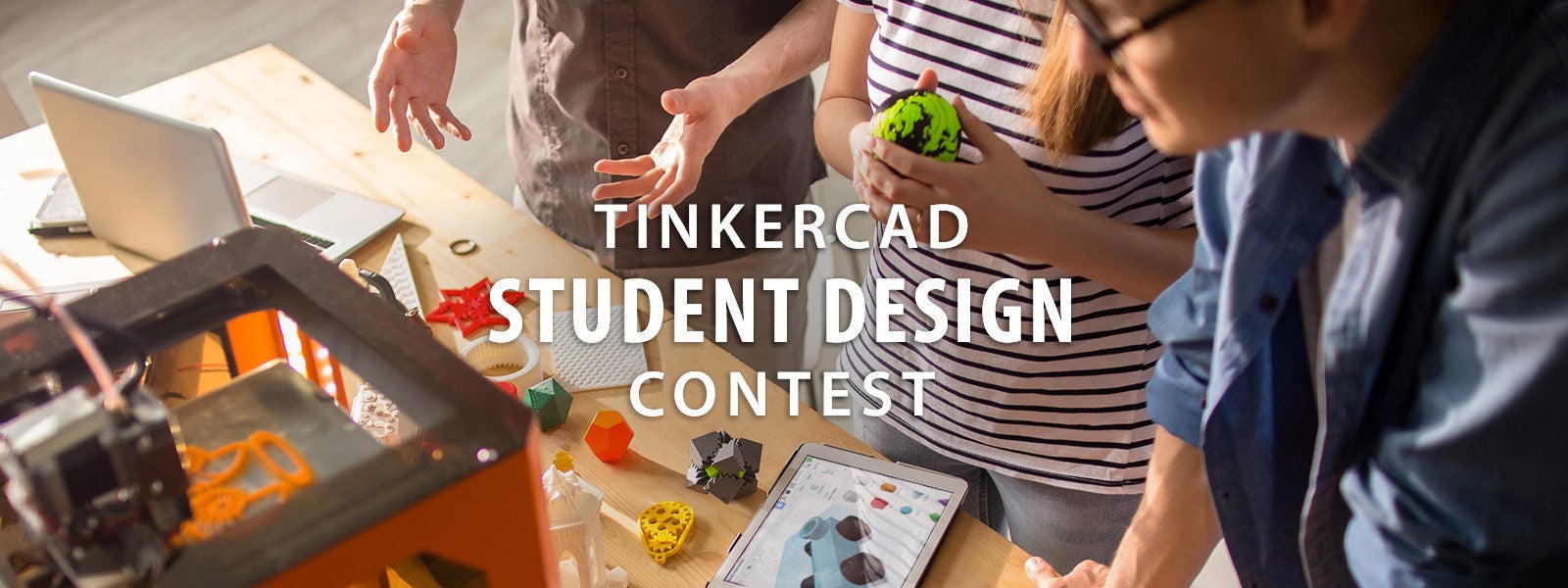
Tinkercad Contest

If you're a teacher or librarian or parent, consider encouraging your child to enter this Tinkercad Contest:

The Tinkercad Student Design Contest is for all students who are using Tinkercad. To enter, you simply need to post an instructable showing how you made a Tinkercad 3D design as part of your homeschooling experience. No 3D printer is required!

We are giving away two prizes of $100 gift cards for the following five categories:

Make it Move – To win this prize, you need to demonstrate that you have designed and made something with functioning moving parts.

Connectors – This prize is for any project that encourages the creation of connectors. It can be as simple as an L-bracket for a robot or as complicated as connecting a bicycle to power a blender. We are looking for creativity and functionality.

Silly Solutions – Show us an example of how you identified a problem, or something broken, and used 3D design to create a fix.

Mashup – Show us how you took two of your favorite things (or things from the gallery) and creatively combined them to make something new.

Scene – This prize is for designs of physical spaces, from parks and landmarks to undersea adventures.

If you have never posted an Instructable before, here are some resources to help you get started:


Reach out to us directly at service@instructables.com

Only 29 days left to enter the Tinkercad Student Design Contest!

Saturday, July 4, 2020

Book Review: Tender Morsels by Margo Lanagan

Tender Morsels is a strange tale shaped by the interplay of real and magical worlds. As a response to trauma, Liga inhabits a magic world that protects her and her two young daughters. 

Urdda, who is the wilder of the two children, longs to leave the safe haven the moon "bab" has created for her mother. She attempts to rejoin the Bear who has disappeared by jumping up in the air near a cliff's edge. Naturally, this alarms Mam.

"Girls were not meant to fly. Where are your feathers? Where are your wings?" Liga tells her daughter Urdda.

Though she cannot follow this bear, Urdda encounters a second bear.

Eventually, by pushing the walls of the second bear's cave, Urdda leaves her mother's "heaven" or place of her hearts desire.

As soon as Urdda enters this real world, she faces danger. She is chased by a bear--not a real one this time, but a danger nonetheless. She finds her mother's cottage has become a ruin. 

Urdda quickly uncovers Lady Anne's secrets. Lady Anne practiced "hedge" witchcraft against the advice of a more experienced witch. 

Urdda also uncovers Mam's secrets which she immediately regrets. Understanding Mam's situation, Urdda is dismayed that, "she could not go back to that blissful, blessed state of not knowing."

Urdda can only go forward toward her future mission as a witch herself.

If you need another novel marked with strangeness, try Parakeet by Marie-Helene Bertino.


Book Review: Switched on by John Elder Robinson

Switched On: A Memoir of Brain Change by John Elder Robinson. 

Robinson undergoes experimental research--allowing his brain to be zapped with electricity--to see if electric stimulation (transcranial magnetic stimulation or TMS) can help improve symptoms of his autism. This is a fascinating journey of self-discovery and personal transformation by the author of
Look Me In the Eye: My Life With Asperger's. 

Robinson volunteers to participate in an experimental study at the Berenson-Allen Center for Noninvasive Brain Stimulation at Boston's Beth Israel Deaconess Medical Center run by Dr. Alvaro Pascual-Leone. TMS is currently used to treat depression and alleviate migraines but it has yet to be approved for autism patients. 

Robinson volunteered to participate in the study because he wanted to "fix" himself, as  he puts it, but it leads to a growing interest in autism research. This growing interest, as seen in the end of the book, even leads Robinson towards a new career.  

Science fiction writers explore electric stimulation in fiction. For example, Elizabeth Moon's The Speed of Dark has a fictional protagonist undergo a similar procedure. Daniel Keyes' Flowers for Algernon, that Robinson frequently refers to, examines the life changing consequences of brain stimulation on a fictional character. 

Robinson, however, is the first to write a true account of TMS experiments from the perspective of a person who is on the autism spectrum. 

As shown by his narrative, TMS seems to have the potential to improve a patient's emotional intelligence. One of the hallmarks of autism is the inability to correctly identify emotions in others or, often, in themselves. 

Robinson writes a true account of the pros and cons of the experiment. Some of the TMS sessions have no effect and some give him moving flashbacks and even hallucinations that elicit intense emotions.

Clearly, the pros and cons of this kind of research must be carefully weighed. On one hand, Robinson can finally perceive emotions. On the other hand, relationships with his friends and wife deteriorate.

Robinson is a unique case because though he suffers from emotional blindness he is also a highly intelligent self-taught sound engineer, photographer, mechanic and writer. His disabilities are offset by his unique gifts which have allowed him to succeed in many different occupations.

Though the book may serve to give many parents and relatives hope for new forms of autism treatment, some of the experiences Robinson describes may be unique to his own case. Even so, TMS has enormous potential and warrants further research.